
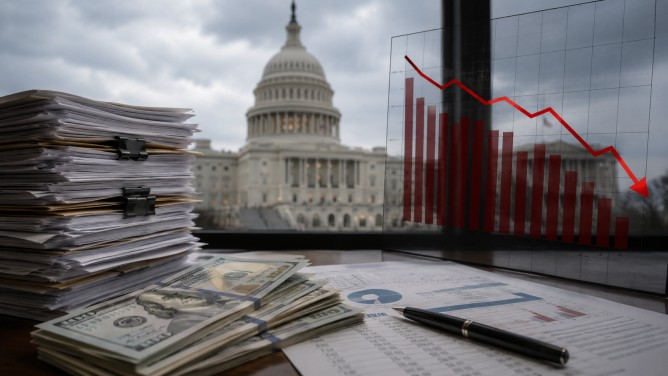
The United States is on track to see its federal budget deficit balloon to approximately $2.1 trillion by the fiscal year 2026, driven by a faster increase in government spending compared to tax revenue, as projected by the Congressional Budget Office (CBO). The deficit for the first ten months of the current fiscal year has already reached nearly $1.8 trillion, marking an increase of about $169 billion from the same period last year. This escalation highlights the ongoing challenge of balancing federal expenditures with income.
A significant factor in the growing deficit is the rising interest costs associated with the national debt. Over the first ten months of the fiscal year, interest payments surged by $117 billion, a 14% increase from the previous year. This trend underscores the financial strain posed by the national debt, as more resources are diverted towards interest obligations. Concurrently, spending on major government programs has also climbed, with Social Security expenditures up by $70 billion, Medicare by $66 billion, and Medicaid by $45 billion.
Despite an uptick in individual and payroll tax collections, the federal government’s revenue stream has been constrained by a notable decline in corporate tax revenue. Additionally, tariff revenue has faced setbacks due to refunds, further limiting the overall income. This scenario has contributed to a revenue forecast that is now approximately $200 billion lower than earlier estimates, even though government spending is expected to remain aligned with previous projections.
The expanding deficit has sparked increased concern over the sustainability of the United States’ borrowing practices and the ever-growing national debt. As the fiscal imbalance widens, questions about future fiscal policies and their implications for economic stability are becoming more pressing. The CBO’s projections serve as a reminder of the complex fiscal landscape the US faces, with the need for strategic measures to address the financial challenges ahead.