
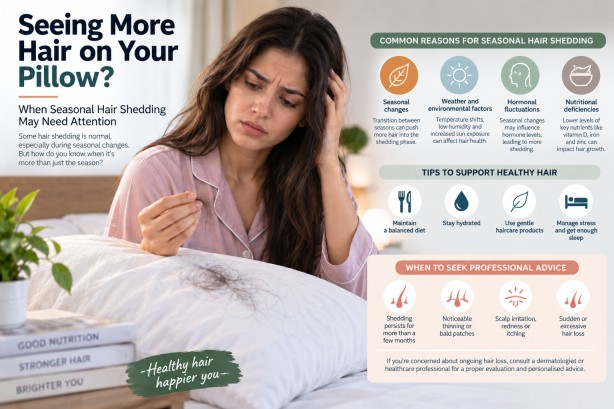
Noticing an increased amount of hair on your pillow, brush, or in the shower can be alarming. While hair shedding can sometimes escalate with seasonal shifts, it is crucial not to dismiss every case of excessive hair loss as merely a weather-related occurrence. Paying attention to the pattern, severity, and duration of hair loss can help determine when to take it more seriously.
Hair goes through various stages: growth, rest, and shedding. At times, more hairs may enter the shedding stage, making hair fall more apparent. Typically, mild seasonal shedding resolves itself without significantly affecting overall hair density. However, if hair fall becomes persistent or increasingly severe, it may stem from other causes beyond seasonal changes and should be closely monitored.
Excessive hair shedding differs from temporary shedding, which is usually mild and progressively improves. In cases of excessive shedding, larger amounts of hair may fall out during activities like washing or styling, and some individuals might notice thinning hair, especially around the parting or hairline. A sudden uptick in hair loss that persists for several weeks warrants attention.
Consulting a professional is advisable if you observe prolonged hair shedding, visible scalp thinning, reduced hair density, concentrated hair loss in specific areas, sudden heavy shedding, or hair loss following illness, stress, significant weight loss, or changes in medication. These patterns might indicate temporary changes in the hair-growth cycle or underlying factors.
Persistent hair fall can arise from various causes, including nutritional deficiencies, thyroid issues, hormonal changes, stress, illness, rapid weight loss, and certain medications. In some cases, gradual hair thinning may be linked to genetics. Given the diverse potential causes of persistent hair loss, it is preferable to seek an evaluation rather than making assumptions. Maintaining a balanced lifestyle with adequate nutrition, managing stress, and practicing gentle hair care can support normal hair growth. While finding extra hair strands may not signify a serious issue, if shedding remains heavy, persists for months, or leads to noticeable thinning, a professional evaluation is recommended.