
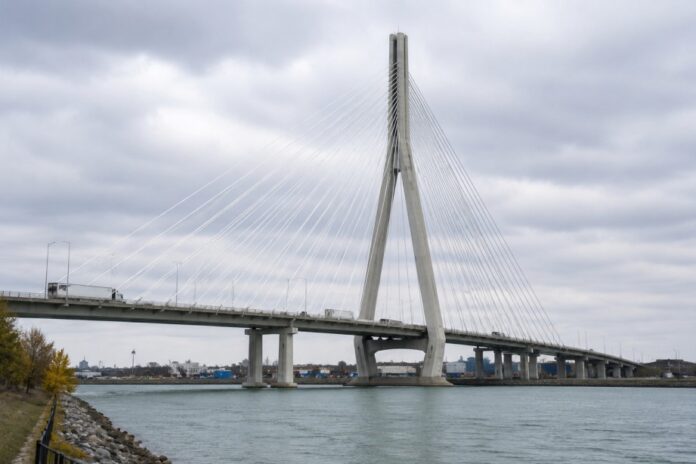
The Gordie Howe International Bridge, a significant infrastructure project connecting Detroit and Windsor, Ontario, has become the center of controversy as Democratic lawmakers allege that the Trump administration intentionally delayed its opening. Initially slated to open in early June, the $4.7 billion bridge is now set to commence operations on July 27. The delay, Democrats argue, was designed to favor a nearby privately-owned bridge run by Matthew Moroun, a known donor to former President Donald Trump.
The bridge, which is a joint venture between Michigan and Canada, aims to alleviate congestion and bolster trade between the U.S. and Canada. The postponed opening has sparked criticism, with opponents expressing concerns that the delay could have negatively impacted cross-border commerce. Despite these accusations, the Trump administration has denied any misconduct in the process.
Matthew Moroun, who operates a competing bridge, has ties to the Trump administration through his political donations. This connection has fueled suspicions among critics that the delay could have been a strategic move to benefit Moroun’s interests over public infrastructure.
The agreement to push the opening to July 27 was reached between the United States and Canada, with officials from both countries involved in the decision-making process. The bridge’s opening is eagerly anticipated, as it is expected to significantly ease traffic and enhance trade efficiency between the two neighboring nations.
While the administration refutes claims of deliberate interference, the delay has nonetheless drawn attention to the broader implications of political influence in infrastructure projects. As the opening date approaches, stakeholders on both sides of the border remain focused on the bridge’s potential to transform regional trade and transportation dynamics.