
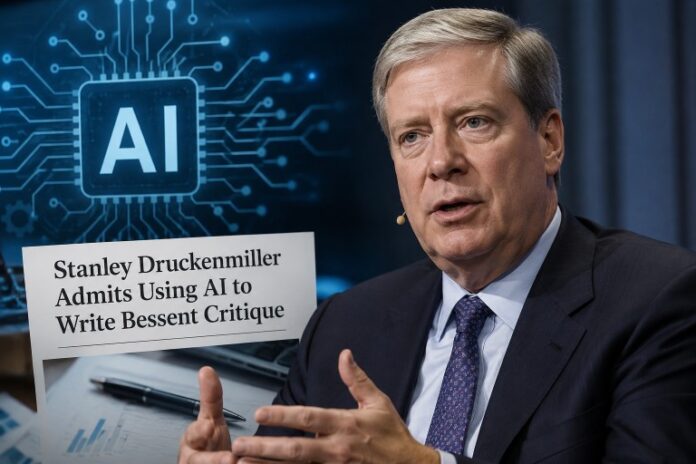
Billionaire investor Stanley Druckenmiller has recently disclosed that he employed artificial intelligence to assist in drafting an opinion piece targeting U.S. Treasury Secretary Scott Bessent’s handling of the bond market. Druckenmiller defended his use of AI, emphasizing that while the technology helped in writing, the concepts and arguments presented were entirely his own. He expressed pride in utilizing AI as a tool in the writing process.
The publication that featured Druckenmiller’s article stood by its decision, asserting that the main concern was whether the contributor’s original insights and arguments were faithfully conveyed in the piece. This statement highlights the ongoing discussion about the role of artificial intelligence in journalism and opinion writing, particularly focusing on issues of authorship, transparency, and maintaining editorial integrity.
This revelation has contributed to the broader conversation about the integration of AI in the field of journalism. As technology continues to evolve, questions surrounding the authenticity of authorship and the ethical implications of using AI in crafting written works are increasingly coming to the fore. The debate is intensifying over how much influence AI should have in shaping narratives and whether it can be used without compromising editorial standards.
While some view AI as a valuable tool that can enhance the writing process, others raise concerns about potential transparency issues and the true origin of the ideas and arguments presented. As the industry grapples with these challenges, the disclosure by a figure as prominent as Druckenmiller adds a significant voice to the ongoing dialogue. This discussion is likely to continue as AI technology becomes more integrated into various aspects of content creation.