
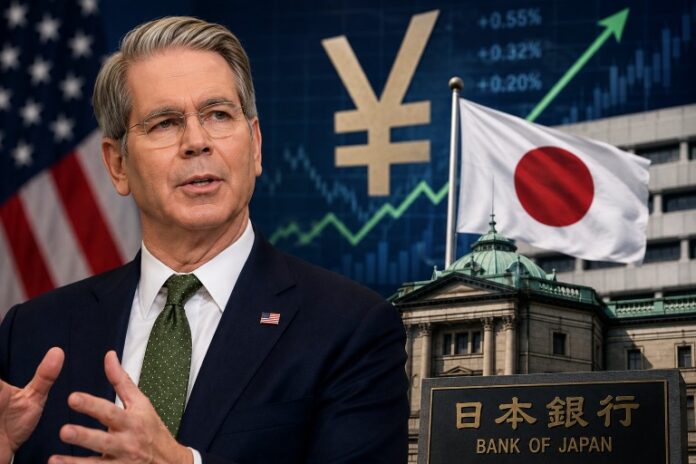
In a significant development for global financial markets, U.S. Treasury Secretary Scott Bessent has voiced firm backing for Japan’s efforts to bolster the yen. This support aligns with growing market speculation that the Bank of Japan (BOJ) might opt for an interest rate hike in their upcoming policy meeting scheduled for September 17-18. Bessent’s comments came during discussions with BOJ Governor Kazuo Ueda at the G20 finance ministers and central bank governors’ assembly in Asheville, North Carolina. He noted that the weakening yen was exacerbating inflationary pressures and underscored the necessity of sound monetary policies and transparent communication to stabilize inflation expectations and curb excessive currency volatility.
The prospect of another interest rate increase by the BOJ has been gaining traction since the central bank’s last hike in June. A hike in September could further cement expectations of a more accelerated monetary tightening strategy. Japan’s rising interest rates have already led to increased borrowing costs, with the country’s 10-year government bond yield recently surpassing 3% for the first time since 1996. This shift reflects both the anticipation of tighter monetary policies and concerns about Japan’s fiscal health.
The upward movement in bond yields is also escalating the government’s debt-servicing obligations. Estimates from the Finance Ministry suggest that if borrowing costs continue to rise, interest payments could see a significant increase in the coming years. Concurrently, Japanese households are feeling the pinch with higher mortgage costs, especially for fixed-rate loans. Despite these challenges, the higher rates offer some advantages, boosting returns for savers and financial institutions on deposits and long-term investments.
The BOJ now faces the intricate task of supporting the yen and controlling inflation without imposing undue financial strain on households, businesses, and government finances. Balancing these priorities is critical as the central bank navigates the complexities of monetary policy in an environment of rising interest rates and fiscal pressures.