
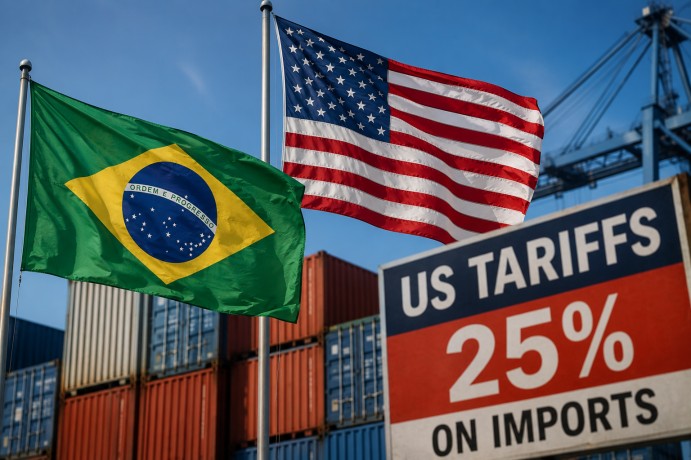
The Brazilian government has expressed strong disapproval of the United States’ recent decision to implement a 25% tariff on certain Brazilian imports, which is set to take effect on July 22. Officials in Brazil have described the move as unwarranted and have dismissed accusations from Washington of engaging in unfair trade practices. In their statement, the Brazilian authorities emphasized their adherence to fair trade standards, rejecting the basis for the tariff imposition.
Despite the new tariffs, a selection of Brazilian products, including coffee, beef, oranges, orange juice, specific oil and gas items, and aerospace components, will remain exempt. This decision aims to prevent any disruption to existing supply chains. The U.S. Trade Representative, however, justified the tariffs by citing an investigation that reportedly identified Brazil’s weak anti-corruption enforcement and what it described as unreasonable trade policies. The purpose of these measures, according to U.S. officials, is to promote fair competition for American businesses and workers while keeping the door open for further negotiations with Brazil.
U.S. Secretary of State Marco Rubio has criticized Brazilian President Luiz Inácio Lula da Silva’s administration, accusing it of not negotiating sincerely. Rubio claims that Brazil’s current economic policies have been detrimental to both American and Brazilian interests. His comments highlight ongoing tensions between the two countries as they navigate these complex trade issues.
Brazil has firmly opposed the allegations and remains steadfast in its stance against the imposed tariffs. The disagreement underscores the challenges in international trade relations and the differing perspectives on what constitutes fair trade practices. Both nations continue to express willingness to engage in dialogue, though significant differences remain unresolved.