
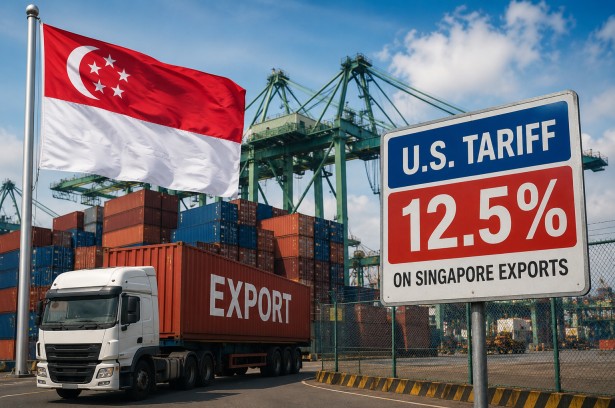
The United States has introduced a new 12.5% tariff on roughly one-third of Singapore’s domestic exports, raising concerns about forced labor enforcement within the broader scope of its trade policy that affects numerous global economies. This move has been met with strong rebuttals from Singapore, which insists it maintains a robust legal framework to combat forced labor and does not condone such practices. The Ministry of Trade and Industry in Singapore indicated its intent to continue dialogues with U.S. trade officials to gain a clearer understanding of how the tariff will be enacted.
Despite the imposition of the tariff, several major export categories from Singapore, such as pharmaceuticals, semiconductors, certain electronics, aerospace products, and energy products, along with goods already subject to specific U.S. tariffs, will be exempt from this new measure. This selective application has provided some relief to the sectors not immediately affected, but uncertainty lingers for others.
Business groups have voiced concerns about the potential for increased instability for manufacturers and exporters in light of these new tariffs. Their apprehensions are compounded by an ongoing U.S. investigation that could lead to further trade restrictions. In response to this evolving trade landscape, industry leaders are advising companies to broaden their export markets and enhance the resilience of their supply chains to mitigate potential disruptions.
Singapore’s firm rejection of the forced labor allegations underscores the tension between the two countries as they navigate these trade challenges. The city-state remains committed to upholding its labor standards and is actively seeking clarification on the specifics of the tariff’s application as it works to protect its economic interests.