
The U.S. Federal Reserve has announced a 0.25 percentage point increase in its benchmark interest rate, bringing it to a range of 3.75% to 4%. This marks the first rate hike since July 2023, as the central bank persists in its efforts to curb stubborn inflation.
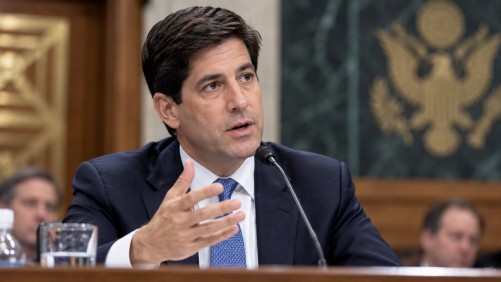
Federal Reserve Chair Kevin Warsh highlighted that inflation remains excessively high, with recent data failing to demonstrate significant improvement in underlying price pressures. Despite these economic challenges, the unemployment rate has held steady, underscoring the complexity of the current economic landscape.
President Donald Trump has publicly called for lower interest rates, emphasizing that reduced borrowing costs are necessary. His stance has reignited discussions about the Federal Reserve’s autonomy in setting monetary policy, a cornerstone of its role in managing the economy.
The decision to raise rates is part of a broader strategy to address inflation, which has been exacerbated by rising energy prices. These higher costs have affected both households and businesses and contributed to volatility in the U.S. bond market. The Federal Reserve’s interest rate adjustments are a tool to influence borrowing costs and economic activities, with higher rates leading to increased costs for mortgages, car loans, student debt, and business borrowing.
In the past, the Federal Reserve had engaged in significant monetary tightening, particularly after inflation peaked at 9.1% in June 2022. The central bank’s aggressive rate hikes throughout 2022 and 2023 resulted in a previous rate range of 5.25% to 5.5%, before it began reducing rates in 2024 and 2025. Current projections from the Federal Reserve suggest that further rate increases may occur by the end of the year, as officials anticipate that it will take several years for inflation to return to the 2% target.
Persistent inflation continues to erode household purchasing power, as recent data indicates a weakening of inflation-adjusted wages. This ongoing economic pressure highlights the challenges facing policymakers as they navigate the path toward economic stability.