
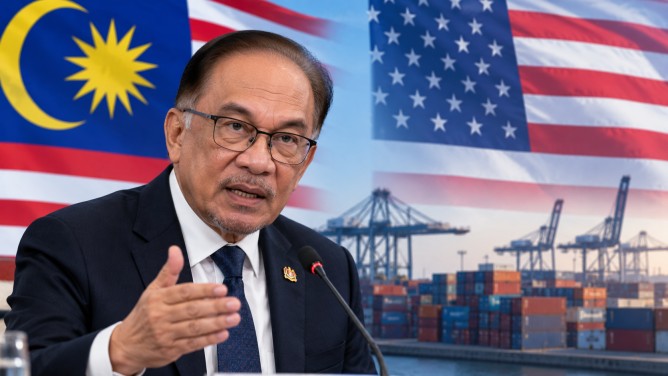
Industry expert Datuk Seri R. Jeyenderan has cautioned that Malaysia should not view the existing 10% tariff imposed by the United States on its products as a fixed rate. He highlighted that the U.S. could potentially introduce further measures if it remains unsatisfied with Malaysia’s handling of issues related to structural excess capacity and transshipment regulation. As the U.S. investigation continues, Jeyenderan advises Malaysian exporters to exercise caution.
To address these concerns, Jeyenderan called for action from Malaysia’s Investment, Trade and Industry Ministry (MITI) and Customs Department. He emphasized the importance of compiling verified industry data, enhancing cargo traceability, and ensuring the effective enforcement of trade and labor laws. These efforts, he suggested, are essential to demonstrate Malaysia’s commitment to compliance and transparency in its trade practices.
Particularly, Jeyenderan pointed to the need for robust transshipment controls to verify that goods labeled as Malaysian are genuinely produced within the country, rather than being rerouted from elsewhere. This measure is crucial in reassuring international partners of Malaysia’s adherence to global trade norms.
Additionally, Jeyenderan urged the authorities to clarify regulations concerning petroleum cargo storage, blending, declarations, and tax treatments. Doing so would help reduce uncertainties faced by businesses and strengthen Malaysia’s negotiating position amid the ongoing U.S. investigation.
He stressed the importance of addressing any shortcomings identified by the investigation promptly and transparently. By demonstrating that Malaysia’s trade regulations are not only established but also properly implemented and monitored, the country can strengthen its credibility and relations with the United States.