
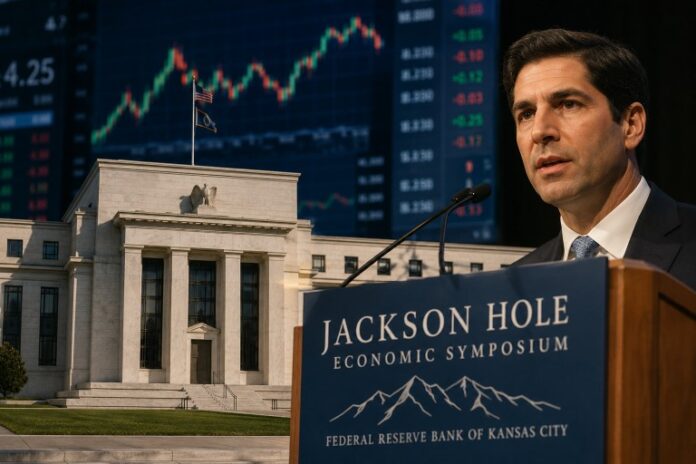
With anticipation building for US Federal Reserve Chair Kevin Warsh’s speech at the Jackson Hole symposium, investors are eager for insights into the Fed’s plans regarding interest rates and inflation, as well as the implications of rising Treasury yields on monetary policy. Warsh’s recent strategy has shifted away from detailed forward guidance, instead urging investors to pay closer attention to market indicators. This shift has left market participants uncertain about the Federal Reserve’s approach to managing inflation, which continues to exceed the 2% target.
The increasing yields on long-term Treasury bonds have further muddled the economic outlook. A segment of investors argues that these higher yields are effectively tightening financial conditions, potentially minimizing the necessity for additional interest rate hikes. This perspective gained traction following the US Treasury’s decision to increase buybacks of long-dated bonds after a recent sell-off. While officials have stated that this move is intended to bolster market liquidity, many investors interpret it as an effort to alleviate pressure on long-term borrowing costs.
As the financial community eagerly awaits Warsh’s address, there is a strong demand for a clearer articulation of how the Federal Reserve plans to realign inflation with the 2% target. Investors are particularly interested in understanding whether further rate increases might be on the horizon. The speech is seen as a critical opportunity for Warsh to clarify the Fed’s stance and the interplay between bond market dynamics and monetary policy decisions.
With the Jackson Hole speech serving as a pivotal moment, market participants will be scrutinizing Warsh’s comments for any indication of the future trajectory of US monetary policy. The relationship between bond market conditions and Federal Reserve actions remains a key focus, as stakeholders seek reassurance and strategic direction amid ongoing economic uncertainties.