
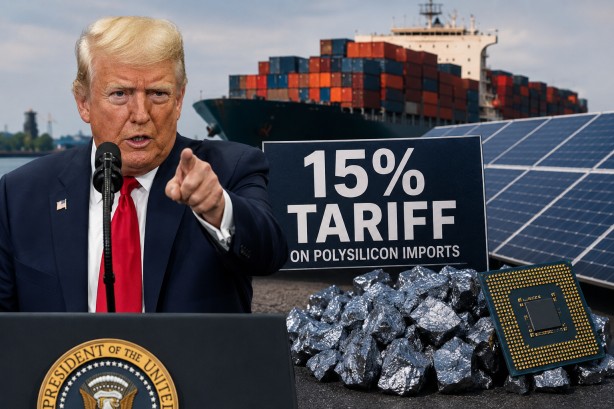
In a move aimed at bolstering domestic production and reducing dependence on China, US President Donald Trump has announced a 15% tariff on imported goods made with polysilicon, an essential component in semiconductor manufacturing and solar panels. Set to take effect on December 4, this tariff targets polysilicon, a highly purified form of silicon instrumental in producing semiconductors for artificial intelligence systems, data centers, and solar cells. Currently, China stands as the world’s leading producer of this critical material.
The tariff announcement includes specific minimum import pricing: $21 per kilogram for polysilicon, $100 per kilogram for polysilicon ingots and wafers, $0.22 per watt for solar cells, and $0.38 per watt for solar modules and panels. These measures are part of a broader strategy by the US administration to enhance the commercial viability of domestic polysilicon production and to fortify supply chains that are crucial for both economic and national security.
In response to the US’s new trade measures, China has expressed criticism, alleging that the United States is improperly leveraging national security concerns to limit the operations of Chinese businesses. Chinese officials have cautioned that such protectionist policies might disrupt bilateral trade, which has been a significant avenue for growth in China’s exports of electronics, AI-related products, and other high-value manufacturing sectors.
Presently, the United States hosts two major polysilicon production facilities: Hemlock Semiconductor in Michigan and Wacker Chemie in Tennessee. To further encourage domestic production, the new policy permits the US government to introduce incentives for companies willing to invest in polysilicon and related manufacturing facilities within the country.