
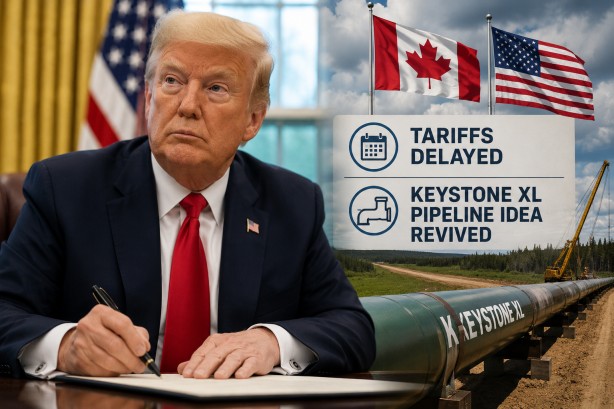
In a recent development, U.S. President Donald Trump has decided to postpone the implementation of a 50% tariff on Canadian goods by three days. This decision comes as both nations report significant progress toward reaching a new trade agreement. While Trump has expressed optimism about finalizing the deal soon, Canadian Prime Minister Mark Carney noted that although substantial advancements have been made, there are still details to be ironed out.
The proposed tariffs, which were expected to impact billions of dollars in Canadian exports, including wine and hockey equipment, will now be temporarily held off. This delay grants both countries additional time to work through the remaining issues and potentially finalize the terms of the agreement. The move is viewed as a positive step in easing tensions that have strained U.S.-Canada relations in recent months, characterized by recurring threats of tariffs and retaliatory trade measures.
In a related note, President Trump hinted at the possibility of reviving the Keystone XL oil pipeline project, stating it “may be awoken from the grave.” Although he did not elaborate on how this project might tie into the current trade discussions, its potential revival could have significant implications. Originally designed to transport oil from Canada’s western regions to U.S. refineries, Keystone XL has faced considerable opposition from environmental groups, landowners, and Indigenous communities, leading to its halt after a crucial U.S. permit was revoked in 2021.
As two major trading partners, the United States and Canada engage in the exchange of hundreds of billions of dollars in goods and services annually. The proposed tariffs have stirred concern among Canadian businesses about the prospect of increased costs and diminished access to the U.S. market. The recent announcement provides a temporary reprieve and an opportunity for both sides to solidify their trade relations.