
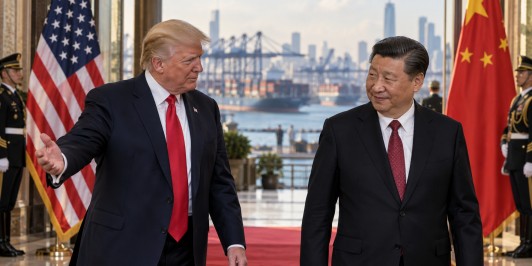
In a high-profile welcome, U.S. President Donald Trump personally received Chinese President Xi Jinping at Joint Base Andrews, initiating Xi’s state visit to Washington. The reception, marked by military honors and a B-1 bomber flyover, underscores the importance of the visit amid ongoing tensions between the two nations.
Central to the discussions during Xi’s two-day visit is the extension of the Busan agreement, as announced by U.S. Treasury Secretary Scott Bessent. This temporary trade arrangement, now extended until January 10, serves as a truce in the trade disputes between the United States and China, the world’s two largest economies. The extension aims to provide a backdrop for further negotiations on trade and other strategic matters.
Trade remains a pivotal issue during the bilateral talks, with both countries also focusing on technology and artificial intelligence. The competition in advanced technologies, particularly AI, remains a point of contention as both nations strive to enhance their global positions in this sector.
President Xi’s visit includes a formal welcome at the White House, meetings with President Trump, and other official engagements. These interactions are expected to foster dialogue on managing economic and strategic differences, aiming for a more stable relationship between Washington and Beijing.
The visit highlights the complex dynamics of U.S.-China relations, as both countries navigate geopolitical tensions and seek to bolster cooperation in areas of mutual interest. The outcomes of these discussions could significantly impact the global economic and technological landscape.