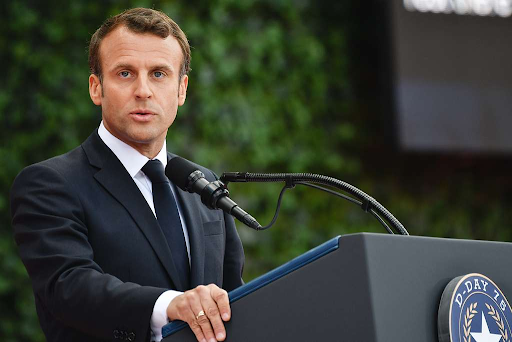
Children deserve safe spaces. They have them in schools, in playgrounds, in regulated public environments where adults and institutions take legal responsibility for their welfare. Emmanuel Macron’s argument at the AI Impact Summit in Delhi is that the internet must become one of those safe spaces — not a notional one, not an aspirationally safe one, but a genuinely safe environment where what is illegal in the physical world is equally illegal online and equally enforced.
The distance between that aspiration and current reality was measured at Delhi in stark numbers. Research by Unicef and Interpol found that 1.2 million children in 11 countries had been victimised by AI-generated explicit deepfakes in a single year. One in 25 children in some nations. The platforms where much of this content is distributed have proved unwilling or unable to remove it at scale. The AI tools producing it are legal and widely available. The gap between the safe internet Macron describes and the internet that currently exists is enormous.
Closing that gap requires both domestic and international action, and Macron has commitments on both fronts. France is pursuing legislation to ban social media for under-15s — a recognition that the current environment is not safe enough for children to navigate without legal protection. Through the G7 presidency, Macron is pushing for international standards that would make platforms legally accountable for child safety outcomes, moving from voluntary guidelines to enforceable requirements.
His defence of European regulation as the framework for achieving this safe space was robust. Against American criticism that the EU’s AI Act stifles innovation, Macron argued that safe environments attract investment and trust — that regulation and dynamism are not in tension but mutually reinforcing. He described the critics as misinformed, a characterisation that is hard to dispute given Europe’s continued record of technological development under its regulatory framework.
Guterres, Modi and parts of the tech industry itself gave Macron support at Delhi. The safe spaces argument — that children deserve digital environments governed by the same legal standards as physical ones — is resonating across political and institutional divides. Whether that resonance translates into the enforceable standards Macron is calling for depends on what the G7 produces. But the demand itself — make the internet safe for children — is one that democratic governments cannot credibly refuse.