
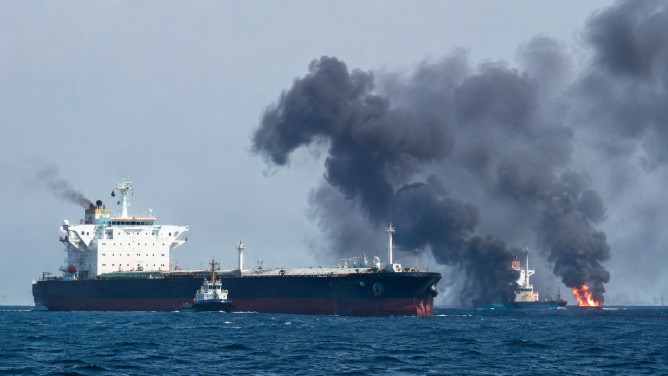
The Islamic Revolutionary Guard Corps of Iran announced it had targeted two oil tankers attempting to navigate the Strait of Hormuz under the protection of U.S. military forces. According to the IRGC, the tankers were in violation of its prescribed shipping routes. Following this incident, four other tankers reportedly reversed course. This development highlights the ongoing tensions in the Strait of Hormuz, a critical conduit for global energy shipments, which have been exacerbated by renewed hostilities between Iran and the United States. The conflict has severely disrupted maritime traffic in the region and has contributed to global crude oil prices surging past $90 per barrel.
Elsewhere in the region, military tensions remain high. Kuwait’s military reported successfully intercepting Iranian drones that were allegedly targeting important military and strategic sites within the country, noting that the event resulted in no casualties. Meanwhile, in Lebanon, Israeli forces conducted a significant military strike near the historic Beaufort Castle. Israel stated the operation was aimed at dismantling Hezbollah’s infrastructure, but Lebanese officials claimed the attack constituted a breach of the existing ceasefire agreement.
In response to the escalating conflict, U.S. President Donald Trump held a cabinet meeting at Camp David to evaluate the situation and its economic repercussions. The ongoing conflict has led to increased fuel and consumer prices, which in turn have placed additional pressure on the U.S. administration. Public sentiment appears to be shifting as well, with recent opinion polls indicating a decline in support for the war efforts among the American populace.
Amidst the regional instability, major energy corporations are seeing a boost in profits, as the spike in oil prices has ripple effects across global markets. The current geopolitical climate underscores the volatility in energy supply chains and brings to light the economic vulnerabilities exposed by prolonged tensions in such a strategically crucial area.